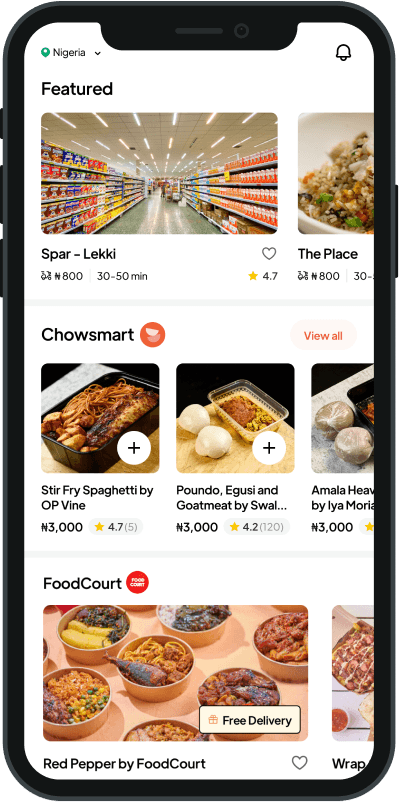
If there is one thing that has never been more convenient in today’s digital age, it’s getting something delivered to your doorstep, whether it’s furniture, clothing, or any transportable goods. Food is no different. While places like America embraced food delivery apps much earlier, Nigeria was not far behind. Jumia Food has been in existence since 2012, but it was not until the COVID-19 era that food delivery truly exploded in popularity, with platforms like Chowdeck and Glovo stepping into the scene. What these apps do is simple: they allow verified restaurants to register on their platforms, and customers can then browse menus, read reviews, place orders, and have their food delivered right to their doorsteps.
Because of this explosion, the food delivery industry has had some remarkable impacts, both positive and negative, on restaurants, customers, and the app creators themselves. On the positive side, people now have easier access to food whenever they want it, and well-loved local delicacies have found a far wider audience than they ever could through a physical location alone. However, some of these apps have also been accused of failing to properly verify the restaurants on their platforms, and the attitude of some delivery riders has sparked no small amount of uproar among users. This article looks at how the rise of delivery apps has shaped the experience of Nigerian restaurants, for better and for worse.
Impacts of Delivery Apps on Nigerian Restaurants
One of the most evident impacts of delivery apps is how they have helped smaller scale restaurants reach a visibility they previously lacked. These platforms have helped provide a wide variety of local restaurants and chains pull in customers they would never have reached otherwise. Glovo, for instance, explained that since entering the Nigerian market in 2018, over 45,000 shops, mostly small scale businesses, have registered on the app. Chowdeck has also recorded massive growth for small scale restaurants, with one striking example being Amoke Oge, which grew from 200,000 naira to a 2.3 billion naira revenue across over 500,000 deliveries within just two years. Beyond visibility, delivery apps have also pushed restaurants to build dedicated teams to handle order taking without compromising food quality, and the unexpected boom in business created employment opportunities that would not have existed otherwise.
However, it is important to note that not every impact has been positive. Some restaurants have accused these apps of failing to verify registered businesses properly, with certain individuals registering under well established brand names. Corporate Ewa, for example, called out Glovo after receiving bad reviews for a business they claimed to have never registered on the platform. This was further confirmed when Tech Point Africa created a fake profile on both Chowdeck and Glovo and both apps approved them with little scrutiny. Beyond verification issues, rude riders and excessive delivery charges have also created friction. Yet for all its flaws, the rise of delivery apps has not made restaurants who are yet to join irrelevant. Physical dining still holds its place, and for many, no app notification will replace the experience of sitting down to a meal.