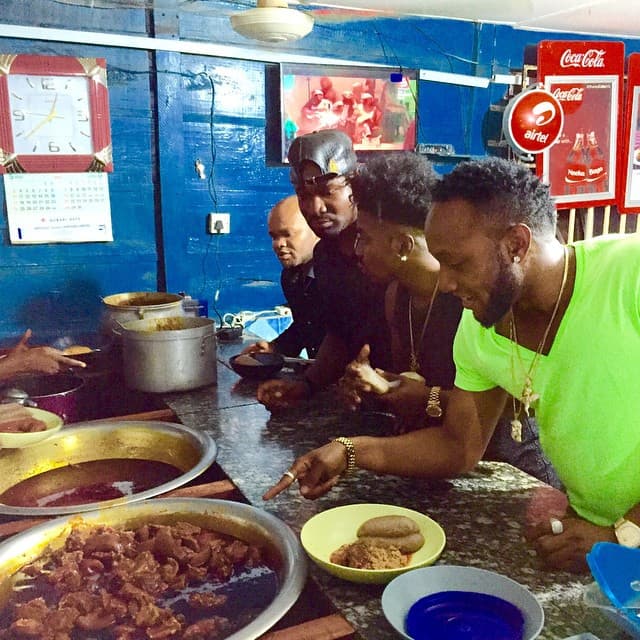
With Nigeria currently facing persistent inflation averaging 14.28 percent, there is not much the average Nigerian can indulge in without counting the cost. Yet food remains the one non-negotiable, and no place delivers on that promise quite like the local food joint. Known across the country as bukas or mama put, these neighbourhood eateries have held their ground for decades, and with over 107,000 of them spread across Nigeria, their footprint speaks for itself.
Part of what has made these local joints a success is their accessibility. For the artisan wrapping up a shift, the 9-to-5 worker with thirty minutes for lunch, or the labourer who needs a filling plate without the financial guilt, the price range at a buka makes sense in a way that most alternatives simply do not. A solid meal of party rice, amala and ewedu, or pepper soup can still be had for between ₦1,500 and ₦3,000, a fraction of what a fast food order would cost, and that is exactly what keeps these joints full from morning to night. Unlike fast food chains that stick to a fixed menu — Item 7 is known for its party rice and shawarma, Domino’s for its pizza — most local joints serve a rotating spread of Nigerian staples that cater to different tastes and moods. Whether you are craving something light or something that sits heavy after a long day, the options are almost always there, and that flexibility has made these eateries indispensable to a large cross-section of Nigerians.
Walk into any buka and the first thing you notice before the food is the energy. Young people, traders, office workers, and retirees share the same benches, and for the average Nigerian who is naturally drawn to environments where people gather, this feels like the perfect atmosphere.
Part of what sustains the loyalty of people to these joints is the friendly and familiar faces. People love to know where their food comes from, and Mama Ayo, who knows her regulars and remembers their preferences, represents exactly that personal touch. For many customers, that warmth is as much of a draw as the food itself, and it builds a trust that no corporate chain has managed to replicate in the Nigerian market. Information also travels freely at these joints. People come to eat and leave knowing something they did not walk in with, whether that is local news, job leads, or neighbourhood happenings.
Between the affordable prices, the variety on the menu, and the familiar faces, the local food joint has clearly earned its place in Nigerian life and there is nothing suggesting that is changing anytime soon.